
Hi, I’m Magdalene! I hope to help you find magic and medicine within your madness.
The name I was given at birth is Laurel though, hence the “SpectacuLaur Thoughts” :)
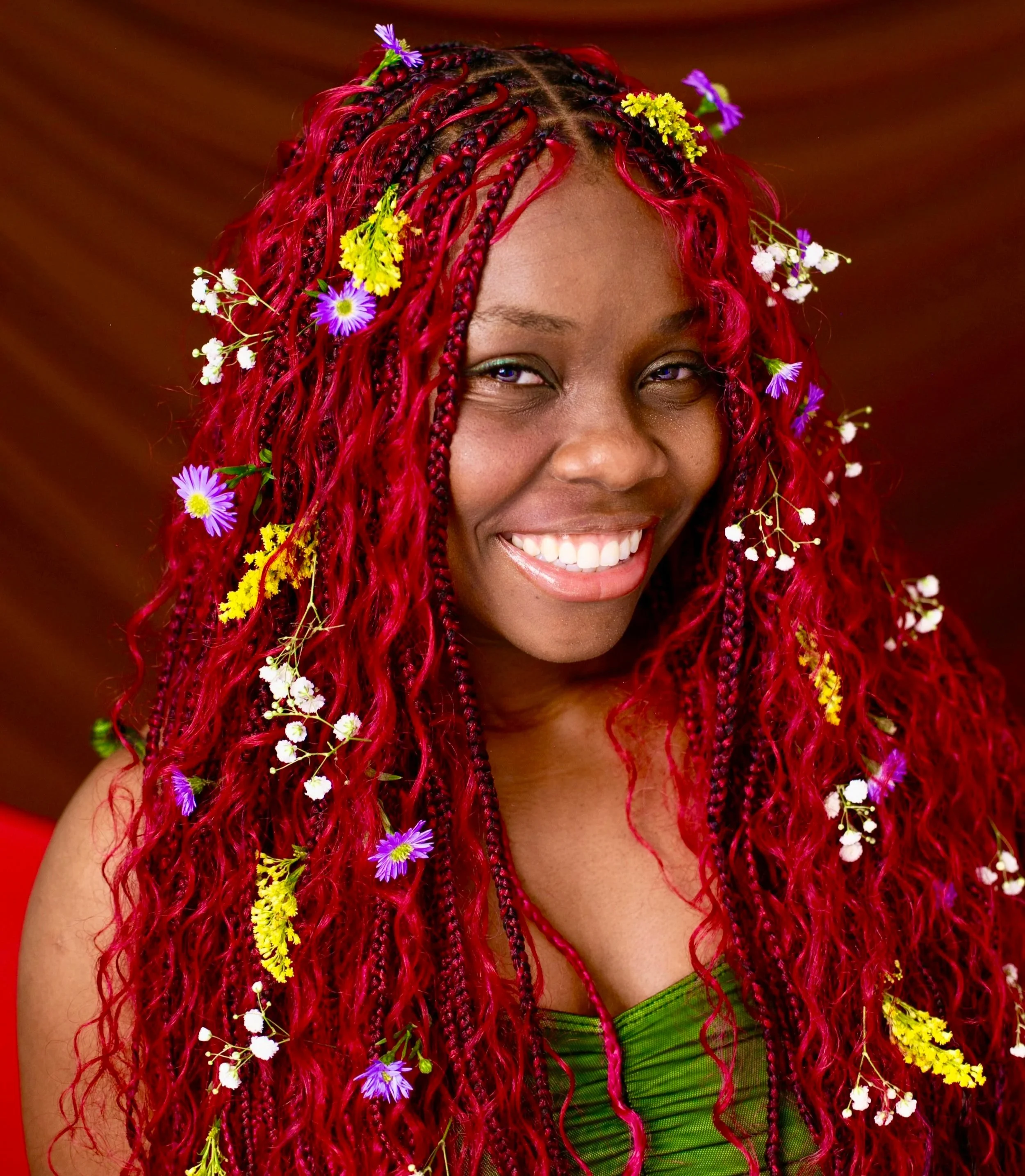
Here’s a little bit about me 🧚🏾♀️:
I’m a Jamaican psycho-spiritual practitioner who now resides in the United States. I identify as Mad because I have lived experience with depression, OSDD, psychosis, and OCD, but the “mentally ill” label doesn’t feel right to me because I’m in love with the ways my brain adapted to help me survive and evolve.
For most of my life, I struggled with depression and even attempted suicide twice. However, the 2020 quarantine became a turning point in my life. During that time, I reconnected with Nature and officially started my religious deconstruction journey. That put me on the path to healing, remembering my soul’s purpose, and connecting with my ancestors. This path involved me experiencing a spiritual crisis which presented as paranoid schizophrenia, but fortunately, my background in animal biology and psychology (BSc. (Hons)) provided a crucial framework for understanding my experience and regaining touch with our consensus reality. The experience expanded my worldview, strengthened my belief in myself, and healed my relationship with my ancestors, Earth Mother, and God. Therefore, there’s no longer any need for me to rely on suicidal ideation to survive, as I now have unwavering faith that I can successfully get through anything I go through.
Neurodivergent people tend to feel disconnected from others, especially if they have to mask to fit in. This often leads to psychological distress, as was true in my case. However, the connection and safety I’ve gained from healing colonial wounds and forming a relationship with my ancestors has empowered me to help other neurodivergent, sensitive persons to find safety within themselves and with other like-minded people who crave a better world and are doing the decolonizing work to co-create it.
Though my path to improved mental health was tumultuous, I now see a clear vision of a better world made possible by our Earth Mother's guidance. I aim to help you envision a New Earth and work towards coexisting in it as your mental health improves. My insights, grounded in scientific, psychological, and Afro-Caribbean indigenous knowledge, can guide you on your wellness journey, regardless of your spiritual beliefs (I love thinking like an atheist to keep my critical thinking and problem-solving skills sharp).
Sensitive beings who have been labelled as “mentally ill” hold the key to a better world because that world must be created by those who feel deeply enough to be attuned to the needs of our ecosystem, and who are thus most capable of helping to meet those needs. Therefore, I strongly believe that sensitive, neurodivergent persons can radically change things on this planet once we all embrace the magic and medicine within our madness. I believe in myself and my ability to transform this world for the better, and my goal is to help you believe in yourself too!
Why do we challenge the biomedical model of mental illness?
Psychiatry has traditionally attributed the cause of mental illness solely to individuals’ biology, often overlooking the impact of environmental, cultural, socioeconomic, and sociopolitical factors on mental distress. However, we exist in an ecosystem, and are all affected by problems within it, so it is negligent for mental health professionals to ignore social and environmental factors when diagnosing individuals and conceptualizing treatment plans for them.
To effectively remedy the mental health and climate crises, we must prioritize systemic and environmental change. The task of reshaping the world to improve our human existence may seem daunting, but it ultimately involves each of us putting in the work to heal and, in the process, discovering the medicine to heal the world. A better world is possible; we just have to believe in our ability to co-create it, and become committed to doing so.
What is Neurodivergence?
This term describes mental functioning that differs from societal norms. Framing individuals as neurodivergent can empower them to view their minds as unique, offering an alternative to potentially stigmatizing psychiatric labels.
What does it mean to depathologize yourself?
The Mental Health Industrial Complex assigns permanent mental health labels to people who exhibit signs of mental distress, regardless of whether their symptoms are appropriate, human responses to external triggers. To depathologize oneself means to understand that your brain’s functioning serves to protect you and help you survive, and that such functioning is not inherently pathological but human. Adopting this perspective on mental health can help you to embrace your neurodivergence and lead you toward radical self-acceptance, bringing you closer to peace with yourself.
Why do we believe that certain mental health conditions are not as chronic as psychiatry makes them seem?
The brain is neuroplastic, meaning that neurons can reorganize in response to learning and experience throughout a human’s lifespan, even in late adulthood. A crucial aspect of this feature is its ability to allow us to evolve individually, so that we can learn to react to triggers in different, more productive ways. Psychiatry often overlooks this potential when administering diagnoses, treating people as statistics instead of providing opportunities for them to assign their own meaning to their experiences, learn from them, and overcome challenges. The declaration that certain conditions are chronic thus acts as a self-fulfilling prophecy, discouraging people from utilizing their brain’s neuroplasticity to their advantage. Neuroplasticity allows us to change our story and our life. As mad and neurodivergent persons rewrite our stories individually, our collective reality shifts for the better.
Book a free consultation to discover how you can assign your own meaning to your neurodivergent experiences, instead of being limited by stigmatizing labels!